Nail Fungus · Review
KeraBiotics Review: Does the Nail Probiotic Work?
By PLACEHOLDER: Your Name · Updated July 2026
Advertising disclosure: This article contains affiliate links. If you buy through them we may earn a commission at no extra cost to you. Full disclosure.
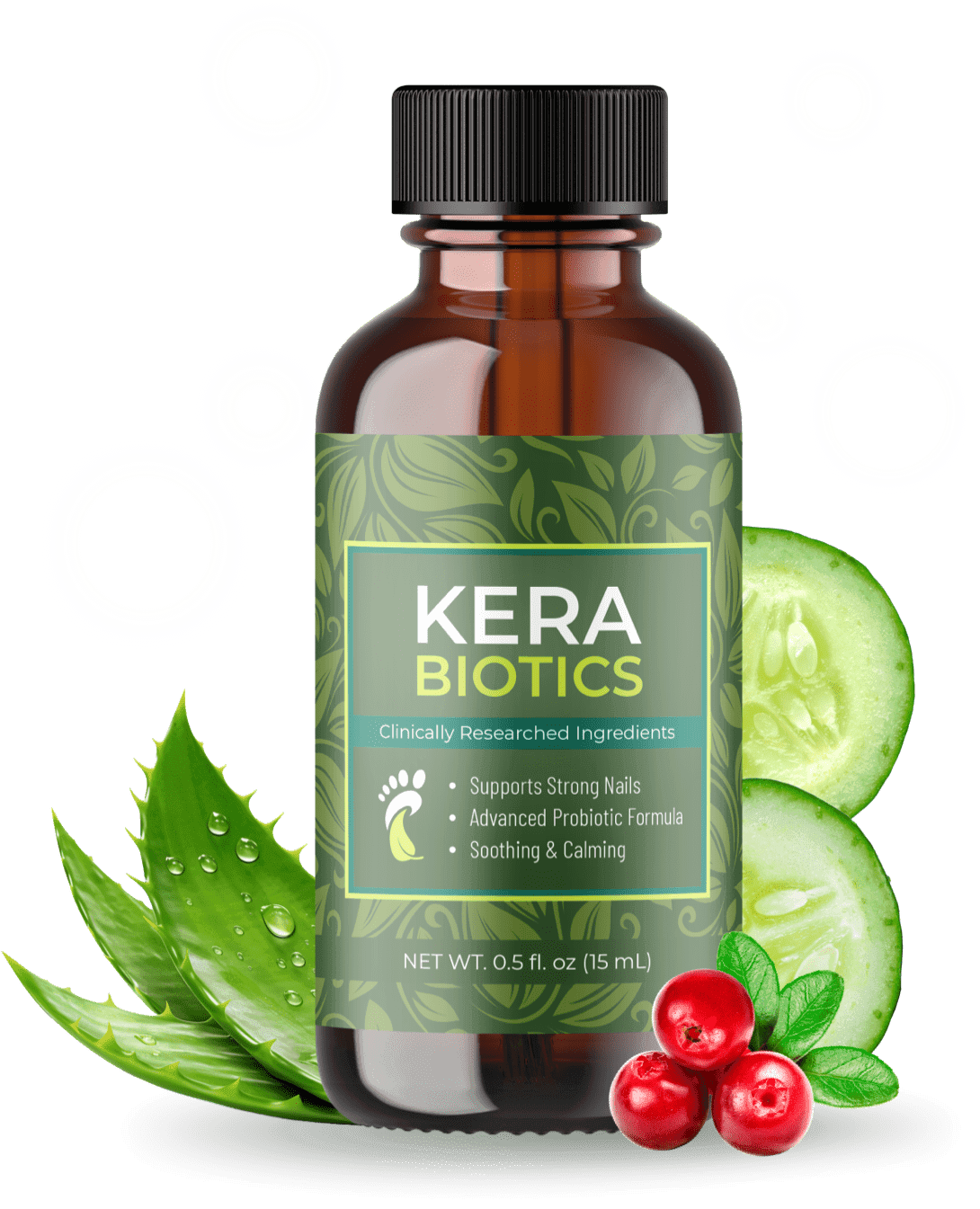
KeraBiotics asks a strange question: what if the fix for nail fungus is not killing everything on your feet, but reseeding the good bacteria that are supposed to live there? It is a topical probiotic you brush onto your nails and skin, and the pitch is that a healthier foot microbiome crowds the fungus out. That is a genuinely novel idea. The honest problem is that it has almost no clinical track record for curing an established nail infection. Below we take the premise seriously, say plainly where it holds up and where it does not, and land on who this actually makes sense for.
KeraBiotics
Topical probiotic formula for the foot and nail microbiome, backed by a 60-day money-back guarantee.
KeraBiotics at a glance
- Verdict: An interesting microbiome-focused topical for mild cases, prevention and nail appearance, but not a proven treatment for an established fungal infection.
- Our rating: 4.0 / 5
- Best for: People with mild or early nail concerns, or anyone wanting to support foot skin health, who like the probiotic angle and value a solid guarantee.
- Price: From $69 per bottle, as low as $49 per bottle on bulk orders.
- Yellow flag: The core premise is novel and not well proven for curing onychomycosis.
Can reseeding good bacteria actually beat nail fungus?
This is the whole question, so start here. Your skin naturally hosts a community of bacteria, and the theory behind KeraBiotics is that a balanced foot microbiome makes it harder for fungus to take hold. Apply the friendly strains, feed the skin, and in principle you tilt the environment away from the fungus. As a concept for keeping healthy feet healthy, that is not crazy. Microbiome science is real, and the idea of supporting good flora rather than scorching everything has legitimate appeal.
Here is the plain answer, though. There is very little clinical evidence that a topical probiotic clears an established nail fungus infection. The fungus in onychomycosis sits inside and under the nail plate, a dense keratin barrier that even prescription topical drugs struggle to penetrate. Bacteria brushed onto the surface face that same wall, and there is a further gap between "may support a healthier skin environment" and "kills the fungus already dug into your nail." So take the premise seriously for prevention and mild cases, and skeptically as a cure. That split runs through the rest of this review.
What is KeraBiotics?
KeraBiotics is a topical liquid you apply directly to your nails and the surrounding foot skin, not a capsule you swallow. Where most nail products in this niche lead with antifungal essential oils, KeraBiotics leads with probiotics: it is built around live bacterial strains meant to support and rebalance the foot microbiome, paired with skin-soothing and moisturizing ingredients. The routine is entirely external.
It is worth being clear about what category this sits in. KeraBiotics is a supplement-style topical, not an antifungal medication. Over-the-counter and prescription antifungals are tested specifically against onychomycosis, the clinical name for nail fungus. KeraBiotics has not been through that kind of testing. It is made in a US facility described as FDA registered and GMP compliant, which speaks to manufacturing quality, not to proof that it treats an infection.
Set expectations before you buy
Nail fungus is stubborn and slow. Even prescription oral antifungals clear it in only about half to two-thirds of cases, and topicals clear far fewer. A topical probiotic is a newer, less tested approach than either, so expect it to help with mild cases, prevention and nail appearance rather than to cure an entrenched infection.
KeraBiotics ingredients
KeraBiotics is built around probiotic bacteria plus a base of skin-supporting ingredients:
- Probiotic strains (Lactobacillus and Bifidobacterium). The centerpiece. These are well studied friendly bacteria, and the concept of using them to support skin flora is plausible. But their use as a topical foot treatment for nail fungus is novel, with little published human evidence for that specific job.
- Aloe barbadensis (aloe vera) leaf juice. Soothes and hydrates skin; a reasonable, well tolerated base ingredient. Supportive for skin comfort, not an antifungal cure.
- Glycerin. A humectant that draws in moisture and conditions the skin around the nail. Good for skin feel, not a fungus treatment.
- Antimicrobial oils. Included to support the skin environment. Some plant oils show antifungal activity in the lab, but lab activity is a starting point, not proof they reach and clear fungus inside a nail.
The honest ingredient concern here is transparency. The published material does not disclose the per-ingredient doses, and with probiotics the amount matters a great deal: strain identity and colony counts (CFUs) largely determine whether there is a meaningful effect. Without those numbers you cannot tell whether the probiotics are present at a serious level or a token one. A named strain on a label is not the same as a proven, dosed active.
Why the missing doses matter more here
With a probiotic, "how much" is close to the whole story. The same strain can be useful at a high, stable count and pointless at a low one. Because KeraBiotics does not publish its CFU counts or per-strain amounts, the label alone cannot tell you whether the microbiome pitch is backed by a real dose. That uncertainty is a fair reason to treat the strongest marketing claims with caution.
Does KeraBiotics work? What realistic results look like
For the right user, someone with mild or early nail concerns, or someone simply wanting to look after foot skin and prevent problems, applying it consistently, KeraBiotics can plausibly deliver:
- Softer, better conditioned nails and skin, largely from the aloe and glycerin.
- A more comfortable foot skin environment, which is the microbiome angle at its most defensible.
- A possible edge as prevention or against very mild surface fungus, though this is where the evidence is thinnest.
What it is unlikely to do is cure an established infection. Once fungus is embedded in the nail, no topical reaches it easily, and the nail itself has to grow out before you see clear results. That means patience measured in months: fingernails take roughly four to six months to fully regrow and toenails six to twelve months or more. Buyers expecting a fast cure are the ones who end up disappointed. For what genuinely clears an infection, see our guide on how to get rid of toenail fungus.
Pricing and guarantee
KeraBiotics is sold direct through the official site and its ClickBank funnel. Pricing works out roughly like this:
- One bottle: around $69.
- Three and six bottle bundles: a lower price per bottle, dropping to about $49 per bottle on the largest package, with free shipping on the bulk orders.
- Guarantee: a 60-day money-back guarantee.
The 60-day guarantee is the single most useful thing in the offer for a cautious buyer. Because the premise is unproven for curing infections, that refund window is what caps your actual downside, and it is why buying a single bottle first, rather than a six-month stack, is the sensible way to test it.
Buy small first, keep the guarantee
The value math only works if you can get your money back. Start with one bottle rather than a bulk order, buy direct rather than through third-party resellers so the guarantee actually applies to you, and be ready to use the 60-day window if it underdelivers.
KeraBiotics pros and cons
Pros
- Novel microbiome approach with a plausible rationale for supporting foot skin health
- Well studied friendly strains (Lactobacillus and Bifidobacterium) at its core
- Aloe and glycerin genuinely soothe and condition nails and surrounding skin
- Simple topical routine with nothing to swallow
- Made in a US FDA-registered, GMP facility
- 60-day money-back guarantee, and as low as $49 per bottle in bulk
Cons
- The 'topical probiotics cure nail fungus' premise is novel and not well proven
- Little clinical evidence it clears an established onychomycosis infection
- Per-ingredient doses and probiotic CFU counts are not disclosed
- Results are slow: nails take 6 to 12 months to grow out clear
- Not a substitute for proven antifungal treatment on a genuine infection
Is KeraBiotics worth it?
It depends entirely on your situation. If you have a mild or early nail concern, or you mainly want to support foot skin health and prevent problems, and the probiotic angle appeals to you, KeraBiotics is a reasonable thing to try with the 60-day guarantee as your safety net. The base ingredients are sound and the downside is capped.
If you have a moderate or established infection, a topical probiotic is unlikely to be enough on its own, and the smarter route is proven antifungal treatment (see the medical note below). There is also an honest DIY point worth making: basic foot hygiene, keeping feet dry, rotating shoes, treating athletic footwear, does a lot of the same preventive work the microbiome pitch is reaching for, at no cost. If you want to compare vetted options first, our ranked guide does the legwork, and the Kerassentials review covers a close competitor built on antifungal oils rather than probiotics.
KeraBiotics
60-day money-back guarantee keeps your downside small if the microbiome approach isn't for you.
For the full comparison, see our ranked guide to the best nail fungus treatments, read the Kerassentials review for a close competitor, or head back to the nail-fungus hub.
Talk to your doctor first
This review is general information, not medical advice. If your nail fungus is moderate or severe, spreading, painful, or if you have diabetes or a weakened immune system, see a doctor or dermatologist before relying on any topical. Diabetics in particular should have foot problems checked, since nail and skin infections can turn serious. KeraBiotics is not a substitute for prescription or over-the-counter antifungal treatment, and a clinician can confirm it really is fungus, many nail problems are not, and prescribe something that actually clears it.
Frequently Asked Questions
Can a topical probiotic really cure nail fungus?
There is very little clinical evidence that it can clear an established infection. The idea of supporting a healthy foot microbiome is plausible for prevention and mild cases, but the fungus in onychomycosis sits under the nail plate where topicals struggle to reach. Treat KeraBiotics as microbiome support, not a proven cure.
How is KeraBiotics different from oil-based nail products?
Most nail products in this space lead with antifungal essential oils that aim to kill fungus. KeraBiotics instead leads with Lactobacillus and Bifidobacterium probiotics meant to rebalance the foot microbiome, paired with aloe and glycerin. It is a newer, less tested approach.
What does KeraBiotics actually contain?
Probiotic strains (Lactobacillus and Bifidobacterium), aloe barbadensis leaf juice, glycerin and antimicrobial oils, made in a US FDA-registered, GMP facility. The per-ingredient doses and probiotic CFU counts are not disclosed, which is a fair transparency criticism.
How long does KeraBiotics take to work?
Nails grow slowly, so any visible change takes months. Fingernails need roughly four to six months to grow out fully and toenails six to twelve months or more, so patience matters regardless of which product you use.
How much does KeraBiotics cost and is there a guarantee?
It starts from around $69 per bottle, dropping to as low as $49 per bottle on bulk orders with free shipping, and it comes with a 60-day money-back guarantee. Buy direct rather than through resellers so the guarantee applies to you.
Is KeraBiotics safe to use?
Its ingredients, probiotics, aloe and glycerin, are generally well tolerated on skin. Still, if you have diabetes, a weakened immune system, or a moderate to severe infection, see a doctor before relying on it, since foot infections can become serious in those cases.