Gut Health · Review
Best Gut Health Supplements 2026 (Ranked)
By PLACEHOLDER: Your Name · Updated July 2026
Advertising disclosure: This article contains affiliate links. If you buy through them we may earn a commission at no extra cost to you. Full disclosure.
Gut health supplements are a crowded, overhyped shelf. Most promise to “detox,” “reset” or “rebalance” your gut, and none of them do any such thing. What actually moves the needle is boring: more fiber, more fermented foods, more plant variety. A well chosen probiotic or soluble fiber can be a modest, useful add on for specific problems like bloating or irregularity, and a few of the branded formulas are worth the money. We scored each one on ingredient evidence, dose transparency, value against a DIY version, and refund policy, then ranked only the ones we'd actually spend on.
Our top pick at a glance
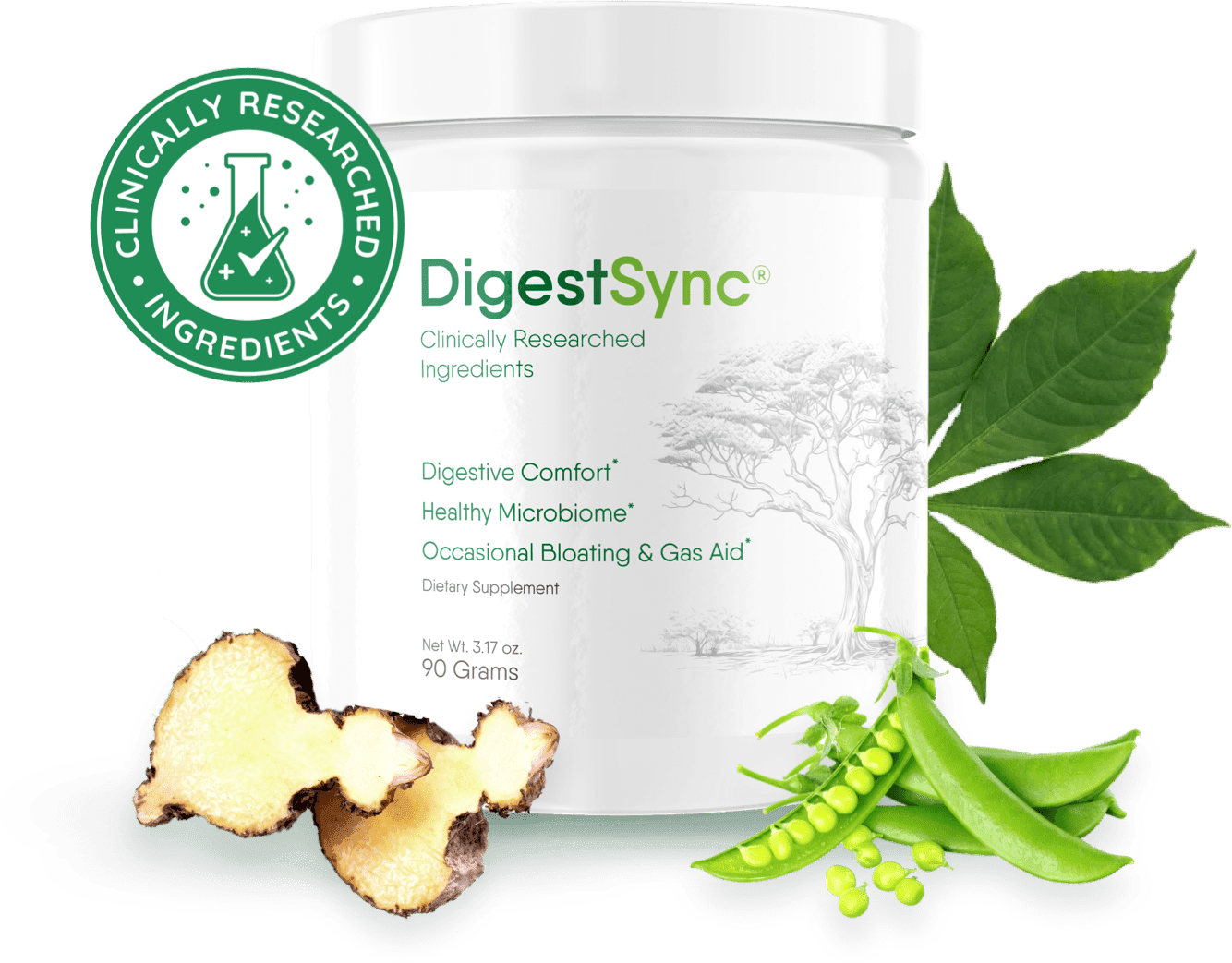
- #1 DigestSync, a soluble fiber led formula built around konjac glucomannan and baobab, targeting gas, bloating, reflux and irregularity. It leads because a soluble fiber approach has a real, food-like mechanism for bloating and regularity, backed by a 60 day money-back guarantee on even empty bottles.
- What these are: probiotics and fibers that modestly support digestion, regularity and comfort. None “detox” or “reset” your gut.
- What to expect: less bloating and more regular, comfortable digestion for some people, best paired with a fiber rich, varied diet, not used as a fix for a poor one.
- Budget route: a named-strain probiotic plus a soluble fiber like psyllium or glucomannan covers most of the mechanism, dose-controllable, for less money.
What actually helps your gut (read this before you buy anything)
Before any supplement, the things with the strongest evidence for a healthy gut are free or cheap and sit on your plate. Eating more fiber, from a wide range of plants, feeds the bacteria that produce the short chain fatty acids your gut lining runs on. Fermented foods like yogurt, kefir, kimchi and sauerkraut add live cultures and, in some studies, increase microbial diversity. Plant variety matters more than any single “superfood”: the more different plants you eat across a week, the more diverse your microbiome tends to be.
Supplements sit on top of that foundation, they do not replace it. And they are strain-specific and dose-specific: a probiotic that helps one person's bloating may do nothing for another's constipation, because the effect depends on the exact strain and amount. So the honest framing for this whole category is that a good probiotic or fiber is a modest add on for a specific symptom, not a gut “reset.” No supplement detoxes or resets your gut, that language is marketing, not physiology.
Set your expectations honestly
A soluble fiber or a well matched probiotic can ease bloating, gas or irregularity for some people, usually a modest improvement over a couple of weeks. What none of them do is “detox” or “rebalance” your entire microbiome, or fix a low fiber diet. Any product promising a gut “reset” is overselling.
How we scored them
We ignored the marketing and built each rating from five factors, scored 0 to 1 and summed to a mark out of 5. The same rubric runs across every review on this site:
- Ingredient evidence, is there real research behind the actives for the claimed benefit? A soluble fiber with satiety and regularity data scores higher than a kitchen-sink blend.
- Dose transparency, are the amounts disclosed per serving? Blends that hide how much of each ingredient you actually get lose points here.
- Value, cost against a DIY version of the key ingredient, a plain probiotic plus a soluble fiber.
- Downside protection, a genuine, easy money-back guarantee, which matters most for newer brands.
- Trust signal, honesty of the marketing and brand track record. Kitchen-sink claims and fading popularity pull this down.
Where a brand does not publish enough detail to confirm a factor, we hold back the points rather than assume the best.
The best gut health supplements for 2026
| Rank | Product | Best for | Key ingredients | Price | Rating |
|---|---|---|---|---|---|
| #1 | DigestSync | Bloating and regularity | Konjac glucomannan, baobab, pea starch | From $49 | 4.2 |
| #2 | DIY: probiotic + soluble fiber | Value and dose control | Named-strain probiotic, psyllium or glucomannan | From $20 | 4.1 |
| #3 | VivoGut | All in one convenience | 14-in-1 blend, probiotics, enzymes | ~$49 | 4.0 |
| #4 | PrimeBiome | Gut and skin gummy | B. coagulans, babchi, slippery elm | From $49 | 3.9 |
#1, DigestSync
DigestSync is a fiber-led digestion formula, and that focus is exactly why it tops the list. It is built around konjac glucomannan, a soluble fiber with genuine evidence for satiety and regularity, plus baobab as a prebiotic fiber, biogenic polyamines and pea starch. It targets the everyday complaints most people in this category actually have: gas, bloating, reflux and irregularity. A soluble fiber approach has a real, food-like mechanism here, fiber that absorbs water and adds bulk genuinely supports regularity and can ease bloating, which is more than can be said for the vaguer “detox” formulas.
It is not perfect. Per-ingredient doses are not fully disclosed, so we cannot confirm the exact glucomannan amount per serving, and that holds back its transparency score. It is also a newer product without a long track record. The counterweights are strong: it is made in a USA FDA-registered GMP facility, and it carries a 60 day money-back guarantee that applies even to empty bottles, so testing it yourself carries little financial risk. On value it is fair, from $49 a bottle at the six-bottle tier with free shipping, though a DIY fiber plus probiotic still costs less.
Pros
- Soluble fiber led, a real food-like mechanism for bloating and regularity
- Konjac glucomannan has genuine satiety and regularity evidence
- 60 day money-back guarantee, honored even on empty bottles
- Made in a USA FDA-registered GMP facility
Cons
- Per-ingredient doses not fully disclosed, so exact glucomannan amount is unconfirmed
- Newer product with a limited track record
- A DIY fiber plus probiotic costs less for a similar mechanism
DigestSync
Soluble fiber led formula built on konjac glucomannan and baobab, targeting bloating, reflux and irregularity. 60 day money-back guarantee, even on empty bottles.
For the full breakdown of the formula, dosing and who it suits, read our detailed DigestSync review.
#2, DIY: a named-strain probiotic plus a soluble fiber (the value pick)
If you want the mechanism without the formula premium, build it yourself. Buy a quality named-strain probiotic and a soluble fiber like psyllium or glucomannan, and you cover most of what the branded products are doing, for less money and with full control over the dose. This is the smart-money route: you pick the exact strain matched to your symptom and the exact fiber amount, rather than paying for a blend and hoping the numbers inside it are clinically relevant.
The only real trade off is convenience, two products instead of one, and a little homework to match the strain to your problem. For that homework, see our guide to the best probiotics for bloating, which covers which strains have actual evidence for gas and bloating rather than a generic “billions of CFU” number.
When DIY makes sense
If you already know your target symptom and want the cheapest, dose-controllable route, a named-strain probiotic plus psyllium or glucomannan is the value play. If you want everything in one bottle with a mechanism aimed at bloating and regularity, DigestSync earns its premium. Strain-by-strain detail is in our probiotics for bloating guide.
#3, VivoGut
VivoGut is a “14-in-1” blend, combining bladderwrack, ashwagandha, cayenne, kelp, L-tyrosine, selenium, copper, magnesium, vitamin B12, probiotics and enzymes. It is vegan, made in a USA GMP facility, priced around $49 a bottle, and backed by a 60 day guarantee. If you specifically want a single all in one bottle and like the convenience of one product covering a lot of ground, it is a legitimate option.
Here is the honest problem: a kitchen-sink blend spreads its doses thin. Fourteen ingredients in one capsule almost never leave room for a clinically meaningful amount of each, so the convenience comes at the cost of potency you cannot verify. There is also a real caution most of the sales copy skips: the kelp and bladderwrack mean it contains iodine, which is a genuine concern for anyone with a thyroid condition. That single caveat is enough to keep it below the fiber-led #1 and the dose-controllable DIY route.
Pros
- All in one convenience, 14 ingredients plus probiotics and enzymes in one bottle
- Vegan and made in a USA GMP facility
- 60 day money-back guarantee
Cons
- Kitchen-sink blend spreads doses thin, so amounts of each active are likely small
- Contains iodine from kelp and bladderwrack, a real caution with thyroid conditions
- Per-ingredient doses not disclosed
VivoGut
A 14-in-1 all in one blend with probiotics and enzymes, vegan and USA GMP. Convenient, but doses are spread thin and it contains iodine, a caution for thyroid conditions.
See the full ingredient rundown and the iodine caution in our VivoGut review.
#4, PrimeBiome
PrimeBiome is a gut-and-skin probiotic gummy, built around B. coagulans, babchi and slippery elm plus a 9-ingredient blend, delivering 500 million CFU per gummy. It is non-GMO, made in a USA GMP facility, priced from $49 to $59 a bottle with a 60 day guarantee. The gummy format is easy to take, and if you dislike capsules that has real appeal.
It sits at #4 for a few honest reasons. First, 500 million CFU is low, most probiotics with actual clinical evidence are dosed in the billions, so the count here is modest. Second, the gut-skin “cell turnover” claims outrun the evidence, the link between a probiotic gummy and skin renewal is far weaker than the marketing implies. Third, the brand's popularity has faded, which pulls down its trust signal. It is a legitimate product with a real guarantee, just not one we'd reach for over a fiber-led formula or a properly dosed standalone probiotic.
Pros
- Easy gummy format if you dislike capsules
- Non-GMO and made in a USA GMP facility
- 60 day money-back guarantee
Cons
- 500 million CFU is low, most studied probiotics are dosed in the billions
- Gut-skin cell turnover claims outrun the evidence
- Brand popularity has faded
PrimeBiome
A gut-and-skin probiotic gummy at 500 million CFU per gummy. Easy to take, but the CFU count is low and the skin claims outrun the evidence.
See how the formula and CFU count stack up in our PrimeBiome review.
Who these are not for
Skip this whole category if you are expecting a gut “detox” or “reset,” none of these do that. Skip the iodine-containing blends like VivoGut if you have a thyroid condition and have not cleared them with your doctor. Skip PrimeBiome if you want a properly dosed probiotic, its 500 million CFU is on the low side. And most importantly, skip supplements entirely as your first move if your diet is low in fiber and fermented foods, because fixing that does more than any pill. If your digestive symptoms are persistent, severe or new, that is a doctor's job, not a supplement's.
Do these actually work?
Honestly, modestly, and only for the right symptom. Soluble fibers like glucomannan and psyllium have real evidence for regularity and can ease bloating, that is the strongest mechanism in this group and why the fiber-led pick tops the list. Specific probiotic strains have evidence for specific problems, but the benefit is strain-dependent, a generic “billions of CFU” number tells you little on its own. Enzymes and the various botanical extras offer smaller, less certain support.
What none of them do is overhaul your microbiome or replace a fiber rich, varied, fermented food diet. For which strains actually have evidence behind them, see our guide to the best probiotics for bloating, or return to the main gut health hub to explore the individual ingredients.
Talk to your doctor first
This is general information, not medical advice. Persistent, severe or new digestive symptoms, including ongoing bloating, pain, changes in bowel habits or blood, need a professional assessment, not a supplement. Fiber supplements can affect how you absorb some medications, and iodine-containing blends can interact with thyroid conditions and medication. If you take any prescription medication, have a thyroid condition, or you're pregnant or breastfeeding, check with your doctor before starting.
Frequently Asked Questions
What is the best gut health supplement in 2026?
Our top pick is DigestSync, because it is a soluble fiber led formula built on konjac glucomannan and baobab, which gives it a real, food-like mechanism for bloating and regularity. It comes with a 60 day money-back guarantee, honored even on empty bottles. That said, the biggest wins for gut health come from diet, more fiber, fermented foods and plant variety, not from any pill.
Do gut health supplements detox or reset your gut?
No. No supplement detoxes or resets your gut, that language is marketing rather than physiology. The most a good probiotic or soluble fiber does is modestly support regularity, comfort or a specific symptom like bloating, on top of a fiber rich, varied diet.
Is it cheaper to build my own gut stack?
Yes. A quality named-strain probiotic plus a soluble fiber like psyllium or glucomannan covers most of the mechanism for less money, and lets you control the dose and match the strain to your symptom. You give up the convenience of one bottle and a little homework to pick the right strain.
Is PrimeBiome's 500 million CFU enough?
It is on the low side. Most probiotics with real clinical evidence are dosed in the billions of CFU, so 500 million per gummy is modest. The gummy format is convenient, but if potency is your priority a properly dosed standalone probiotic is a better bet.
Is VivoGut safe if I have a thyroid condition?
Be cautious. VivoGut contains kelp and bladderwrack, which means it contains iodine, and iodine can interfere with thyroid conditions and medication. If you have any thyroid issue, clear it with your doctor before taking an iodine-containing blend.
What should I look for on the label?
Disclosed doses at meaningful amounts rather than a proprietary blend, named probiotic strains rather than just a CFU count, and a real money-back guarantee. For fiber, a soluble fiber like glucomannan or psyllium has the strongest evidence for regularity and bloating.